
Legal Knowledge Center

Franchising 101: Help Your Franchisees Implement Business Solutions
(0) Franchising 101: Help Your Franchisees Implement Business Solutions

In a previous post, we discussed how developing a good questioning strategy can help franchise support representatives to solve franchisees' business problems. This article covers the next step - implementing a solution.

1. Determine the timeframe for implementing the agreed-upon solution.

Often franchisees will have predetermined expectations about how, and when, their support representative will help them implement a solution to a problem. These expectations are sometimes not realistic. It is therefore important to clearly define and understand the franchisee's timeline expectations by asking questions such as:

  • "What is your anticipated time frame for implementation?"
  • "Are there any other deadlines to take into account?"
  • "Can the solution be implemented in stages?"
  • "Have you ever undertaken anything like this before?"
  • "If so, how long did it take?"
  • "What process did you go through?"
  • "How much preparation do you expect your employees will need in order to implement?"

2. Establish the criteria for determining if the solution has solved the problem.

Once the problem has been defined and a solution has been settled upon, the franchisee will probably be eager to develop a set of criteria for assessing the success of the proposed solution. Your role as a Franchise Support Representative is to assist in developing a set of reasonable criteria for evaluating the solution.

Some potential questions to ask when guiding franchisees are:

  • "What do YOU think the criteria should be for assessing whether this solution is working?"
  • "What indicators should we be looking at?"
  • "Which of these criteria is MOST important to you?"
  • "Is there general agreement on these criteria?"
  • "How much of an improvement or increase are you looking for?"
  • "How will you measure that improvement?"
  • "What is the minimum benefit you realistically expect?"

3. Gauge the level of the franchisee's resistance to change.

In many cases, the solution envisioned by the franchise support representative and that envisioned by the franchisee can be quite different. You need to get a sense of what the franchisee expects and also of his/her adaptability to change. You can take the measure of the franchisee's flexibility to alternative solutions through questions such as:

  • "What kind of options would you be willing to consider?"
  • "If we come up with a different solution, how would you feel about that?"
  • "How locked in are you / your employees to this type of solution?"
  • "Is there any reason why you might not want to try that approach?"
  • "How much of a change are you / your employees willing to accept?"

4. Know who the franchisee's decision makers are.

To gain a complete understanding of a given problem and of the process proposed to solve it, it's crucial to know who is responsible for making key decisions for the franchisee. You can determine this by asking questions such as:

  • "Which people will have the most impact on this decision?"
  • "How do they get along?"
  • "Do you see any potential for conflict in this situation?"
  • "Who needs to be kept informed of our progress?"

5. Determine internal and external conditions which could affect the success of the solution.

Decisions for change are often affected by internal and external conditions not directly related to the problem but which nevertheless have tremendous bearing on it. To find out what those conditions are, you could ask:

  • "Are there any other changes going on in your franchise at the present time?" (or that have recently transpired)
  • "Is the money for this program contingent on anything?"
  • "Do you foresee any change in personnel in your organization that might affect your decision?"

6. Formulate an implementation plan.

After gathering all of your information and settling on a solution to the problem, the next step is to formulate a clear plan to implement it. Make sure that each player knows his/her role and is committed to it.

Every good plan entails three basic elements: goals, strategy, and schedule. Make sure your plan includes:

  1. A clear statement of the goals to be reached,
  2. A statement of the proposed methodology to reach those goals, including who has "ownership" of the various elements, as appropriate, and
  3. A time frame for achieving the stated goals.

If you fail to develop a thorough implementation plan, there is little chance that your solution will be implemented.

Image by Pete Linforth from Pixabay

Reputation Management: 5 Steps to Rebuild Your Image After a Lawsuit
(0) Reputation Management: 5 Steps to Rebuild Your Image After a Lawsuit

The end of a lawsuit – or any crisis, for that matter – can necessitate the question of how best to move on.

How to rebuild or manage your reputation going forward after a public embarrassment can be a significant challenge, and not just for major public figures like Martha Stewart or the heads of large companies like United Airlines.

While celebrities or other wealthy individuals can afford teams of professionals to help them navigate the obstacles of managing their image, the rest of us often need to find our own way – perhaps with the help of a trusted friend or family member. Here are five critical steps you can take to help you find your way through these troubled waters.

1. Avoid speaking publicly on the cause of the crisis.

Revisiting or rehashing the past is almost never beneficial. If you need a reason to help avoid the conversation, you might suggest that your preference for staying quiet is based on advice from legal counsel. Whenever the subject of your lawsuit or crisis does arise, be careful with what you say. You want to avoid appearing at all confrontational, or like you are trying to explain away or defend yourself or your actions. This may give the impression that you are making excuses, which will only reinforce any negative perceptions that people have about the incident.

2. Stay away from further sources of trouble or controversy.

This should go without saying, but moving forward you need to avoid any behavior that could get you into more (possibly worse) trouble. You will also want to avoid associating with anyone who might get themselves into trouble of their own and tarnish your reputation in the process.

Make sure to pay your bills in full and on time. The key here is to avoid any new crisis – financial, legal, or moral – that will remind people of your previous problems.

3. Get back to work as soon as possible.

Being productive is not only good for your psyche, but also for public perception. Work to regain your confidence, but be sure to avoid anything that could create a perception of being cocky. This can mean scaling back your ambitions – or public discussion of those ambitions at a minimum – and going quietly about your business. You should try to create or reinforce the perception of yourself as reliable, honest, hardworking and trustworthy.

4. Strive for an easy-going demeanor.

They say that the meek are destined to inherit the Earth. To effectively manage your reputation after a lawsuit, you want to avoid being too loud, overzealous, confrontational, or generally rambunctious. However, that does not mean you should strive to look like a push-over. Instead, let an air of quiet confidence and cautious optimism govern your behavior. Keep a level head, and avoid putting on airs.

5. Indulge in some philanthropy.

After a time, you may want to consider some small-scale philanthropic activities. Try to avoid undertaking anything that might call unwanted or excessive attention to yourself or your legal trouble. Be understated but helpful in your efforts. You may want to align yourself with a philanthropy that is somehow related to the subject of your litigation – if the role is a good fit. However, make sure that your involvement puts you on the right side of the issue, and be very careful not to look like you are only getting involved to help polish your image. The negative perception that might be generated by being seen to use a charity for personal gain will be greater than the positive impact of the philanthropy on your image.

Conclusion

No lawsuit or crisis is ever pleasant. Even though they may get our adrenaline running or force us to focus on efficiency, they are still extremely stressful and counterproductive. Even if we win or ultimately find ourselves vindicated, lawsuits still adversely affect public perceptions of us and our reputations. While there is some novelty found in our brief celebrity, it is quickly outlived and requires us to be far more cautious and purposeful in rehabilitating or shepherding our reputation. 

For those who represent substantial interests or find themselves in the public spotlight for the wrong reasons, it can be helpful to surround themselves with professional teams to help manage their reputation after a lawsuit or other crisis. However, whether efforts are being coordinated by paid professionals or just with the help of a friend or family member, the points listed above should serve as guideposts to help rekindle a tarnished reputation or otherwise return to productivity and put the past behind us.

Image by iStockPhoto.com

About the Author:

A Suffolk native, Sara Waterson has been writing for Net Lawman after graduating at the top of her class at the University of Nottingham. She is passionate about law and seeks to educate her readers to the best of her ability. In her spare time, Sara loves to spend time walking in the local countryside with her partner and two dogs.

To Resolve Franchisee Problems, You Must Ask the Right Questions
(0) To Resolve Franchisee Problems, You Must Ask the Right Questions

One of the most important tools in a franchisee support representative's problem-solving toolbox is a well-developed questioning strategy.

Thoughtful, well-crafted questions will help you define a franchisee's problem and determine their needs. But a good questioning strategy has a far broader purpose: it will help you gather useful information about the wider forces surrounding the problem.

Your questions should be crafted to help you to find out:

  1. The scope of the problem.
  2. The dollar cost of the problem, i.e. how is it affecting the franchisee's bottom line.
  3. Any preconceived notions that the franchisee has as to how to solve the problem.
  4. The time frame and logistics of implementing a solution,
  5. Whether the proposed solution can be carried out with currently available resources.
  6. The degree to which the franchisee is open to change.
  7. The franchisee's key decision-makers and the role each one plays in the business.
  8. The internal and external conditions affecting the problem-solving process.

Gear your first set of questions to determine the scope of the franchisee's issue.

Sometimes a franchisee does not adequately convey the urgency of the problem in your initial conversation. You need to probe beneath the surface by asking "feeling-finding" questions constructed to determine the degree of importance the problem holds for the franchisee.

Some good examples of these probing types of questions are:

  • "On a scale of 1 to 10, how important is ____________________ to you?"
  • "What is the most important reason to solve this problem now?"
  • "Do others in your company feel as strongly about ___________ as you do?"
  • "How valuable would a solution to this problem be to you?"

Get the franchisee to consider how the problem is impacting their bottom line.

Economics are a strong factor that will sway a franchisee either towards a given solution or against it. Therefore it is important to determine the difference between present costs versus the costs of the solution you are advocating.

To determine this difference, you should be asking fact-finding questions regarding finances and the assumptions the franchisee is using to arrive at an estimation of those costs. Later, you can use these same assumptions in justifying the costs of your solution.

For instance if the franchisee is having problems relating to outdated, malfunctioning or insufficient equipment, some typical questions might be:

  • "How does the occurrence of the problem impact operations (e.g. does it shut down all or part of operations)?"
  • "What is the average out-of-pocket cost of each occurrence?"
  • "Does that include maintenance and insurance costs?"
  • "How much do you lose in sales on average at each occurrence?"
  • "What is your total labour cost for employees during each occurrence / shutdown?"
  • "Does that include employee benefits?"

Important factors to talk about are: labour, waste, lost sales, maintenance and repair costs, supplies, depreciation, and cash flow.

Uncovering the franchisee's preconceived notions.

Franchisees will often have preconceptions of a solution to the problem. Before you offer your solution, assess what they are thinking by asking questions such as:

  • "What experience have you previously had with this problem?"
  • "How would you propose to solve this?"
  • "What impressions did this experience leave on your employees?"
  • "Do you think any of the people involved might have some ideas about the way this problem should be handled?"

Always give serious consideration to your franchisees' thoughts and preconceptions in implementing or modifying a solution.

Image by Gerd Altmann from Pixabay

A 5-Step System to Solving Franchisee Problems
(0) A 5-Step System to Solving Franchisee Problems

Whether you are a Franchise Support Representative dealing with franchisees, or a teacher helping a student work through the reasons why they are having trouble with math, the steps to effective problem solving are essentially the same:

  1. Gather information and define the problem.
  2. Determine the probable causes of the problem, after considering all possibilities.
  3. Develop potential solutions, then choose the “best” fit.
  4. Outline an action plan for implementing the solution.
  5. Follow up during the implementation process to see how successful it is.

1. First you must define the franchisee's problem by gathering all the information.

A “problem” occurs when there is a discrepancy between what one expects will or should happen and what actually does occur. The deviation is usually caused by some sort of change. Defining the problem entails gathering sufficient information to sort out why the unexpected occurred, instead of what you would reasonably expect to happen.

Gathering information begins with the following inquiries:

  • Who are the individuals involved in the problem?
  • What are the factors that make up the problem?
  • What is the source of the problem?
  • When did the problem begin and how long has it persisted?

2. Once you have the information, you can determine the probable causes of the problem. 

From the information you have collected from the franchisee, you can generally determine its probable causes. Your goal is to determine at which point the franchisee's business operations strayed from the franchisor's model. You should pinpoint any changes that may have been causative, and then move on to developing potential solutions.

3. Develop a group of potential solutions for the problem.

Questioning and information gathering to this point have focused on the past. Once you move to the present – to identifying the problem – it then becomes possible to look toward the future and to formulate solutions.

Clearly go over the nature and cause(s) of the problem with the franchisee. Then determine the resources that are available for solving the problem – such as additional capital, personnel, materials and time. You must operate within this framework to develop a solution that is practical and constructive.

The search for solutions begins with an examination of both the franchisee’s experience and your own in dealing with similar or related problems. You should also invite suggestions from other individuals who have a stake in resolving the problem. Always consider all possibilities for solutions, particularly novel or “offbeat” approaches. Embedded within these are often the seeds of truly great ideas.

One recommended strategy for arriving at an optimum solution is to brainstorm options with your franchisees, formulating as many ideas as possible and noting these down without comment. The brainstorming approach encourages the development of a large number of options and often results in one idea leading to another - perhaps better - idea. Moreover, brainstorming is an excellent exercise for getting to the roots of a problem as well as learning more about your franchisee's thinking patterns.

The solution that is ultimately chosen must address the problem within the constraints of available resources. Each potential solution must be evaluated in this light.

4. Outline an action plan with the franchisee.

When you and the franchisee settle on a workable solution, put together a workable action plan to put it into practice. Determine practical timelines for implementing each step of the action plan. 

5. Follow up.

Follow up with the franchisee as each stage of the action plan is implemented, to determine the success of the plan to date and decide on any changes or improvements that may be necessary. 

Image by PublicDomainPictures from Pixabay

How Driverless Cars are Changing the Auto Insurance Industry
(0) How Driverless Cars are Changing the Auto Insurance Industry

Elon Musk, CEO of Tesla, has made his position clear that if one of their self-driving cars has an accident, Tesla will not be liable and it will be up to the individual’s insurance unless the accident was the result of a design flaw.

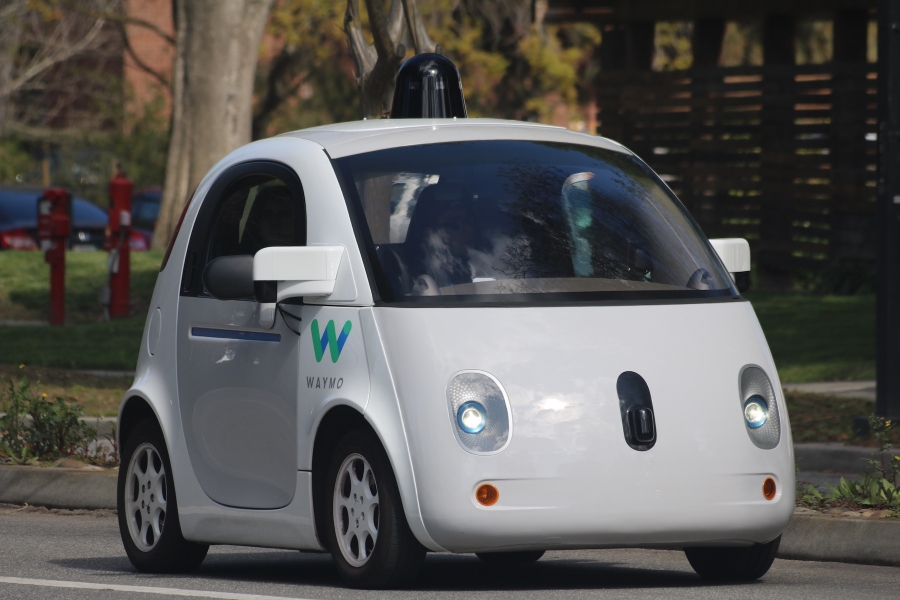
Volvo, Waymo (Google) and Mercedes Benz, on the other hand, have all stated that they would accept full responsibility. The real question is, how will insurance companies assess liability between the manufacturer and the driver, or will they hold both parties accountable?

Autonomous vehicles are loaded with safety features and crash avoidance systems, making self-driving vehicles much safer overall. But accidents will happen, no matter how safe the design. The question of who – or what – is liable will still depend on the individual factors that resulted in the accident.

Regardless of what Elon Musk thinks, manufacturers and software designers will definitely be held liable to some extent in many cases. Self-driving vehicles continue to have problems adapting to bad weather and fast-changing road conditions, and liability for accidents occurring in autonomous mode under these conditions would land squarely on the shoulders of the car company.

But one big advantage the car companies have is this: testing has consistently shown computers to be safer drivers than humans. So it is logical to assume that under normal conditions, autonomous vehicles will have fewer accidents than human-operated vehicles.

UK Legislation and Insurance Coverage

The UK Government’s Automated Vehicles Act provides that, while their vehicle is in self-driving mode, drivers will not be held responsible for how the vehicle drives. For the first time, corporations such as insurance providers, software developers and automotive manufacturers assume this responsibility.

Adrian Flux was the first UK insurer to provide driverless car insurance. The policy is dependent on a licensed driver being in the vehicle and able to take control at any time, and can be invalidated if the owner fails to properly maintain the vehicle, including timely downloading all updates to the software. The driver would be liable under UK law if he/she is under the influence of drugs or alcohol, is texting or otherwise distracted, or if the vehicle is exceeding posted speed limits.

Adrian Flux’ website also outlines the following interesting points:

The UK’s road’s minister, Andrew Jones recently outlined how the insurance industry will adapt to the introduction of driverless cars and the question of liability by saying, “…in the event of a serious collision in driverless mode, it would be the vehicle at fault, instead of the human driver.”

The National Highway Traffic Safety Administration in the US also, for example, considers Google’s autonomous driving software can be identified as the driver.  How this interpretation of liability will work with the State of California’s ruling requiring a fully licensed driver to be present in the car is still unclear. If there’s no steering wheel in the car, as Google is planning, why would a human occupant need a driving licence or car insurance?

That last paragraph raises the issue of who is considered the “driver”. If the car / software is held to be the “driver” under the law, then the auto maker must be held responsible to a large degree. A number of insurance industry analysts have said that this crosses over into product liability rather than personal insurance. If the technology malfunctions or if the car fails to respond as it was intended to, this is clearly a product liability claim and the auto maker’s insurance would and should pay for damages.

Here's an interesting question to consider.

If the law requires a driver to hold a valid driver’s license to operate a vehicle, will it not then be necessary to institute a series of driving tests that the car must pass before it can drive itself?

Conclusion

The insurance industry will continue to adapt and adjust as the driverless car industry evolves and as the pattern begins to emerge over time as to the types of accidents occurring, the number of claims processed and the quantum of damages paid out.

While improvements to safety systems have lowered the frequency and severity of certain types of collisions, they are also much more expensive to repair and replace. This results in higher payouts from insurance companies, which results in higher insurance rates being passed on to the consumer. On the up side, though, the safer your vehicle is, the lower the rate you will get from most underwriters.

For the immediate future, it seems likely that most insurance policies will still require a licensed driver to be present in the vehicle and ready to take over in the event of an emergency. An underwriter may assess liability based on how much control the human operator had or might have had over the vehicle.

If there is no means for the individual to take control, then the individual would bear no responsibility and the auto maker would be liable for the damages. Insurers and governments still have time to develop and implement laws, policies, rules and regulations before self-driving vehicles become a common sight on our streets and highways.

Image licensed by CreativeCommons.org

Franchising 101: How to Deal With Resistance from Franchisees
(0) Franchising 101: How to Deal With Resistance from Franchisees

It is natural for franchise support representatives to feel that if you present our ideas clearly and logically and with the best interests of franchisees at heart, they will accept your expertise and follow your suggestions to build their business. It therefore comes as a surprise when you find out that some franchisees will always resist change, no matter how reasonable the recommendation.

Resistance is Futile?

At first it is natural to label the resisting person as stubborn and even irrational, and to respond by reiterating your suggestions or vehemently justifying your recommendations. But in examining the nature of resistance, it is important to understand that resistance is:

  • a reaction to an emotional state deep within the person;
  • not necessarily an evaluation of the suggestion on a logical, rational level;
  • a predictable and natural emotional reaction which serves to protect the individual against stressful situations;
  • often a necessary phase of the learning process.

It is only natural that the Support Representative would wish that resistance on the part of the franchisee would simply disappear, for on one level it makes your task that much more difficult. But remember that resistance is not futile. In fact, it can serve a valuable purpose as a learning tool.

Countering the objections of a franchisee and working through an issue with them can be a tremendous stimulus to growth – both on their part as business people and for the relationship as a whole. For true learning to occur, it is necessary that all feelings of resistance on the part of a franchisee will have to be expressed directly, before they can accept and use your counsel.

Dealing with Resistance

Key skills required to deal with resistance are:

  • the ability to identify the signs;
  • being able to view resistance as natural, that it is a sign that the learning process has begun;
  • supporting the franchisee in expressing their feelings and objections;
  • not internalizing the resistance or seeing it as a personal attack.

Forms of Resistance

Resistance can take many forms. Here are some of the most common.

  1. The Franchisee persists in wanting more information. No matter how much is given, it's not enough. While some of the questions will undoubtedly be reasonable, at some point it will exceed reasonable levels and you will begin to feel impatient. This reaction is a good barometer for judging when a simple need for information crosses the line to become resistance.

  2. "I need to give you more details." A corollary to item #1 is when the Franchisee insists on giving you way too much information. For instance, you may ask "How did this problem start?", and the response might be, "Well, I think it all began about five years ago on a Friday afternoon in May when… "

  3. Time pressure. The Franchisee indicates that he/she would really like to implement the suggested change, but not right now - the timing is not right, we're far too busy, we're short-staffed at present, etc.

  4. Practicality. This refers to situations when the Franchisee protests that he/she is living in the "real world" and is facing "real world pressures". The implication, of course, is that the Support Representative is not on the firing line, and is overly idealistic and impractical.

  5. Verbal attack. The most blatant form of resistance is an angry verbal attack by a Franchisee. Your response to such an attack may be either to withdraw or to respond in kind. Both of these responses indicate that you are taking the attack personally rather than seeing it as just another (though highly unpleasant) form of resistance.

  6. Confusion. When a Franchisee asks for help, he/she is likely sincerely seeking clarification. But if the Franchisee continues to claim lack of understanding after you explain the situation once or twice, the "confusion" could just be a form of resistance.

  7. Silence. The silent approach is one of the hardest for Support Representatives to deal with. You may talk to the Franchisee until you're blue in the face and be met with little response or just a passive silence. He/she may reply that he/she has no particular objection to what you're proposing – but be warned, silence doesn't mean consent. In matters important to business, a Franchisee is sure to have some response.

  8. Intellectualizing. Rather than focusing on the practical matters of implementing a change, the Franchisee may begin exploring theory after theory about why things are the way they are. This intellectualizing is actually a means of escaping the reality at hand and is a form of resistance.

  9. Moralizing. Moralizing resistance can be recognized through the use of certain key words and phrases such as "those people should", "they need to understand", etc. When you hear a Franchisee taking this tack, it is probably a defence against the reality of the change.

  10. Compliance. Beware of the Franchisee who expresses a desire to get to solutions quickly, with no need or desire to discuss problems. Likewise the Franchisee that implies "whatever you do is fine with me". While the compliant Franchisee who totally agrees with you and seems eager to know what to do next seems like the ideal situation, compliance of this sort can be one of the more difficult forms of resistance. Typically an absence of reservations is part and parcel of a "low energy agreement".

  11. Methodology. A Franchisee's persistent questioning about the methods of implementing a change can represent a legitimate need for information. But once you have established the credibility of a proposed change, repeated questions on the part of the Franchisee about implementation strategies, or suggestions of alternate methods, may be a form of resistance that will impede progress.

  12. Flight Into Health. This occurs when a proposed change is being discussed as a resolution to a problem, yet partway through the discussion it appears that the Franchisee no longer has the problem you were addressing in the first place. It has now magically disappeared, so there is no longer any reason for the change.

REMEMBER – Resistance does not actually mean "No".

Image by Herbert Bieser from Pixabay

How Canadian Travelers Can Avoid High Medical Costs Abroad
(0) How Canadian Travelers Can Avoid High Medical Costs Abroad

Baby boomers have the freedom and the resources to travel but they are also of an age when they face the very real possibility of incurring medical costs in a foreign country. So how do you indulge your passion for travel while providing for unexpected medical emergencies at the same time?

A Sweat Equity Plan is Like a Rewards Program for Your Employees
(0) A Sweat Equity Plan is Like a Rewards Program for Your Employees
Building a business is hard work, and building a successful business is even harder. It requires a dedicated team of motivated people who want it to succeed.
9 Things You Should Do if You're Involved in a Vehicle Accident
(0) 9 Things You Should Do if You're Involved in a Vehicle Accident

Do you know what to do if you're involved in an automobile accident? Here is a list of 9 steps you should follow.

Resolving Franchisee Issues Step 2: Encourage Input and Discussion
(0) Resolving Franchisee Issues Step 2: Encourage Input and Discussion

Our continuing series on Resolving Issues with Franchisees provides guidelines for the Franchise Support Representative to follow in attempting to find a solution to contentious problems with a franchisee by listening to their point of view and brainstorming to come up with solutions.